


A trajectory that is taking shape
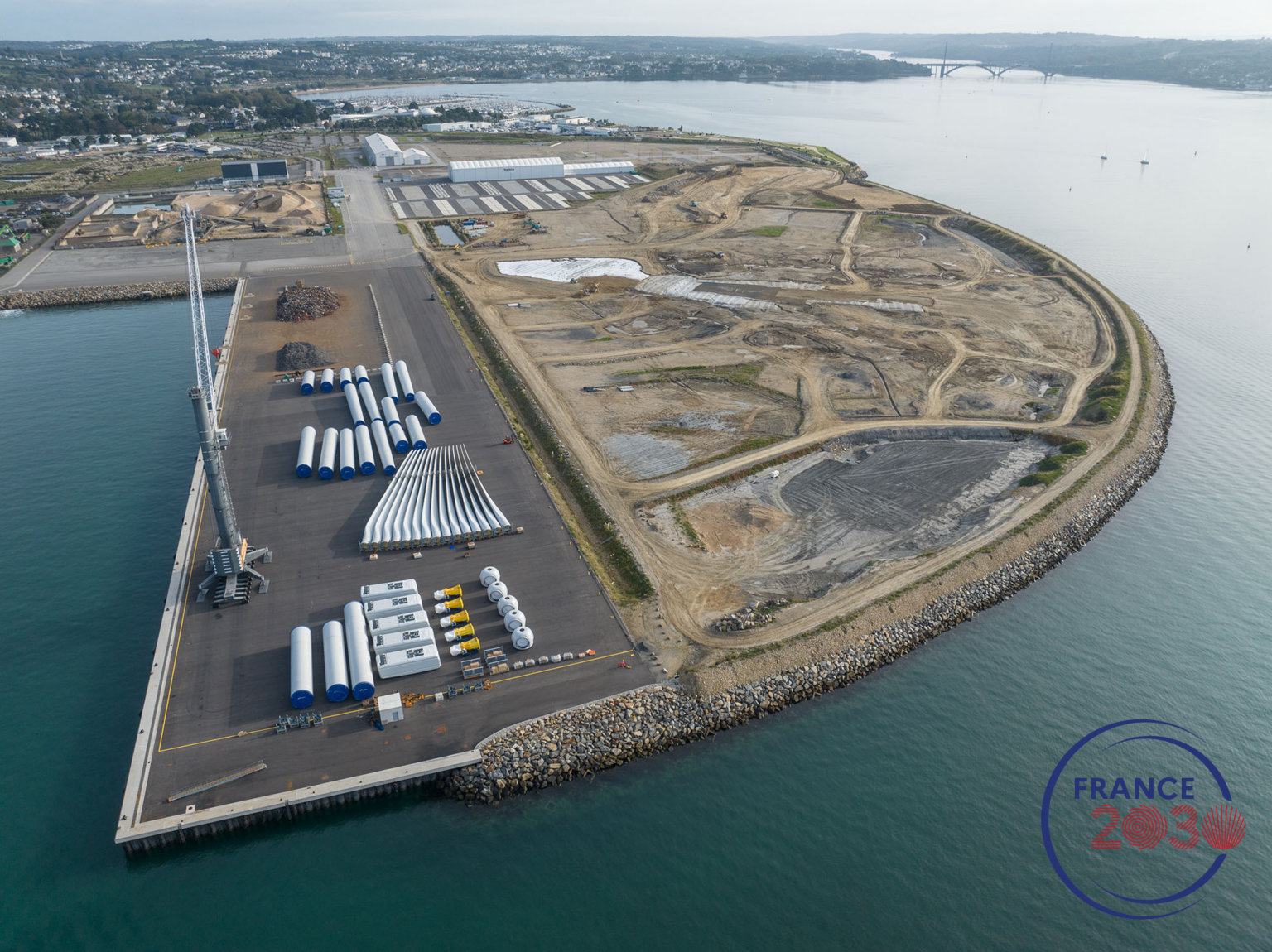
BrestPort’s InFloW project has been selected by the French government as part of the France 2030 initiative, which is administered by ADEME. This selection is accompanied by more than 58 M€ in financial support, intended to help adapt port infrastructure to the development of offshore wind power.
Beyond the funding, this selection recognizes a strategy that has been in place for more than ten years to develop the industrial capabilities of the Port of Brest and support the growth of the marine renewable energy sector. Beyond the funding, this selection recognizes a strategy that has been in place for more than ten years to develop the industrial capabilities of the Port of Brest and support the growth of the marine renewable energy sector.
The development of floating wind power requires infrastructures capable of supporting large-scale industrial operations. With InFloW, BrestPort will continue to adapt its facilities to meet the needs of this rapidly growing industry.
In particular, the project includes:
- the reinforcement and modification of the docks;
- the development of dedicated logistics zones;
- expanding capacity for industrial activities.
Ultimately, the MREs terminal will bring together on a single site the various steps required for the development of floating wind projects, from the manufacturing and assembly of the floats to their launch.
This recognition marks the beginning of a new phase of development, with ongoing research and the advancement of the infrastructure needed to address the industrial and energy challenges of the future.
In the long term, the InFloW project could help create 4,000 direct and indirect jobs and contribute to reducing greenhouse gas emissions, with an estimated reduction of nearly 850,000 metric tons of CO₂ by 2050.
In addition to infrastructure, InFloW helps strengthen Brittany’s industrial ecosystem by creating the conditions necessary to support future projects in the sector.
