ORE Terminal

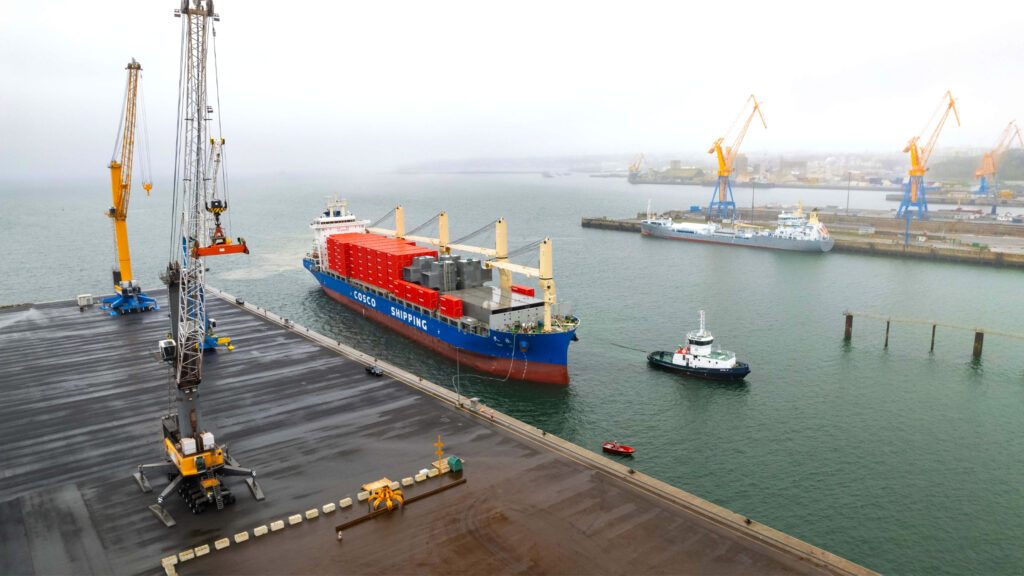
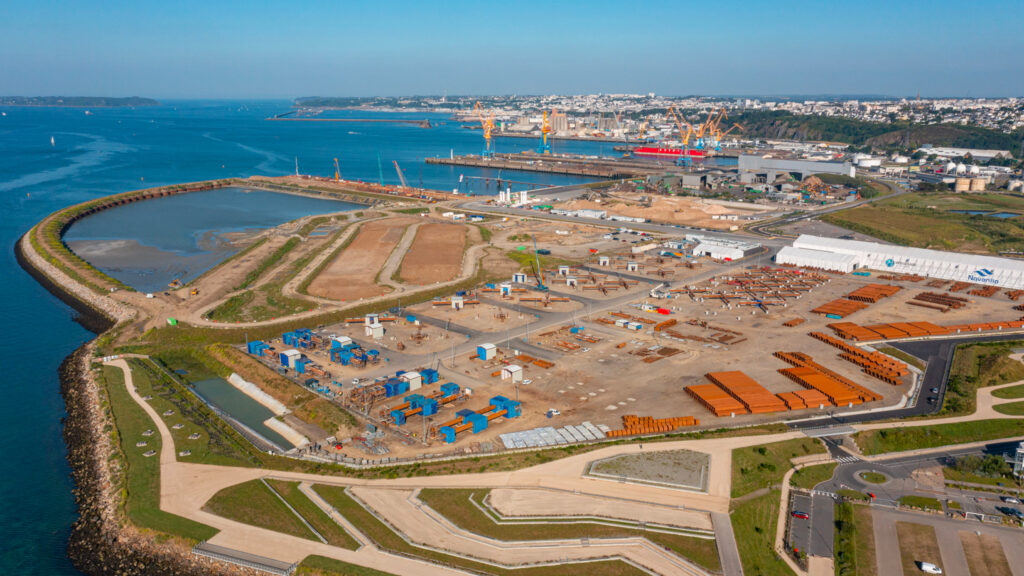
In 2013, the Brittany Region launched a structural development plan for BrestPort, which aimed to attract and develop marine energy-related industries by building new maritime infrastructure and developing the available land in the polder. The latter has committed €250 million to the construction of this polder. This major project has become a considerable asset: a 400-metre quay dedicated to heavy cargo and an area of over 50 hectares, already partially operational and fully available by 2027 to accommodate the wind power industry.

The features are as follows :

  • A 400m-long quay with a 100m-deep handling platform capable of accommodating all types of handling (lifting by heavy load crane, hauling by SPMT)

  • Carrying capacity of 10 to 64t/m²

  • A draught of 8 m CM depth of 12 m at reference level (12.25 m LAT) at the quay

  • 50 hectares of industrial plots connected to networks

  • Heavy roads connecting industrial lots to the new quay

  • A car park with 1,100 spaces.

This project is now partially operational, and its platform has been in use since 2020:

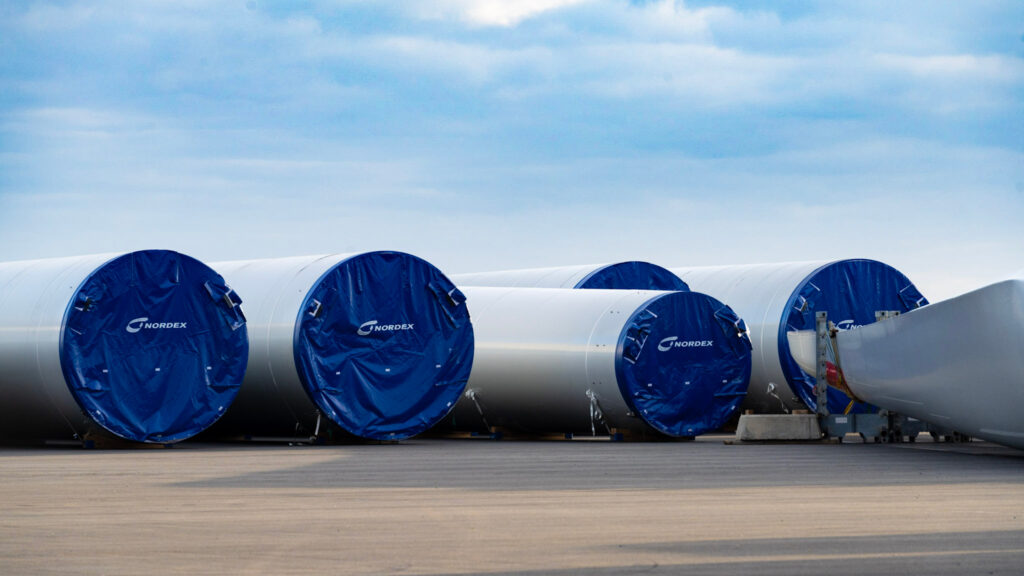
  • Haizea, a manufacturer of wind turbine towers and monopiles, assembled the towers for the 62 wind turbines of the 500 MW Ailes Marines offshore wind farm project in Saint-Brieuc Bay in Brest. Haizea is also supplying wind turbine towers for the ongoing Yeu-Noirmoutier and Dieppe-Le-Tréport projects until 2026.

  • Navantia-Windar has assembled several parts for the jackets used in the windfarm off the coast of Saint Brieuc.

  • Eolink plans to assemble the 5MW France-Atlantique demonstrator between 2026 and 2027, including the integration of the turbine and blades in Brest.
InFloW

BRESTPORT'S POSITIONING IN THE MARE MARKET

The InFloW project marks a decisive milestone for France’s—and Brittany’s—maritime energy transition. Backed by an investment of around €250 million led by the Brittany Region, BrestPort is transforming its infrastructure to accommodate the fixed-bottom and floating offshore wind industry, meeting the needs of future wind farms in the Atlantic and the Celtic Sea. The ambition is clear: to make Brest a benchmark site capable of assembling twenty to thirty wind turbine floaters per year, and, for some projects, integrating the next generations of turbines (with capacities of up to 25 megawatts).
 
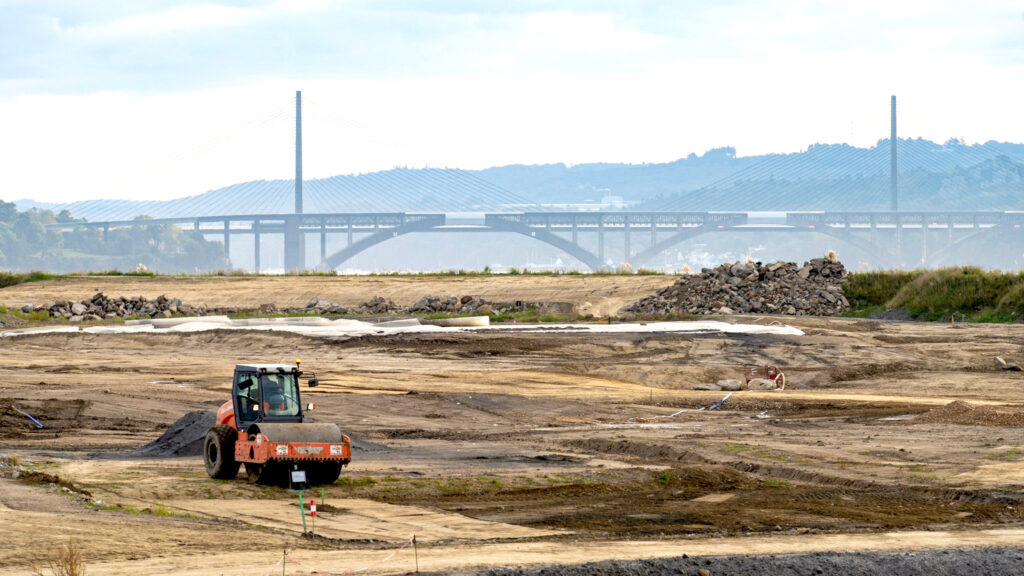
At the heart of the project is a terminal dedicated to offshore renewable energies, already in operation for five years, whose capacity has been multiplied through the construction of a new polder and a new quay as part of the Brest Port Development Project (PDPB in French).
 
With InFloW, the terminal will scale up to host activities including the manufacturing and assembly of wind turbine floaters, storage of foundation components, floaters and turbines, and the establishment of an industrial site linked to the marine energy sector.
A 400-meter heavy-load quay, along with a second refurbished quay, will enable the loading and unloading of components. The yard areas will be reinforced to accommodate heavy industrial operations, while an innovative maritime interface—combining a semi-submersible barge and a beaching ramp—will facilitate the launch of structures. For the projects concerned, ten to fifteen floaters can be stored afloat prior to activities involving the integration of towers and turbines, carried out within the port using a giant crane, followed by the first quay-side tests at two to three pre-commissioning berths.
 
The schedule includes preliminary studies in 2025–2026, followed by a public consultation phase. The final investment decision to launch construction is expected in 2028, with infrastructure delivery planned for 2030 and a ramp-up phase through to 2033. In the meantime, the terminal will continue to host certain fixed-bottom offshore wind activities as well as its first floating wind projects.
The project will generate significant economic impacts: between 2,000 and 3,000 direct and indirect jobs are expected across the region to support the projects. From an environmental perspective, Brest will help add several thousand gigawatt-hours of additional decarbonized electricity to the grid each year, avoiding approximately 850,000 tonnes of CO₂ emissions over the 2030–2050 period.
 
InFloW is built on strategic partnerships with leading industrial and logistics players. Brest thus becomes a cornerstone of the national marine renewable energy sector, offering a robust, competitive, and sustainable industrial solution.

3D immersion at the heart of future activities